
Mundane Miracles
Key Takeaways
A primary human problem is not lack of evidence for God but the suppression and rejection of the evidence already given.
The extraordinary person of Jesus Christ is most often encountered through the ordinary rhythms of daily life.
God's miracles in Scripture always move toward restoration of what he created rather than displays of power for their own sake.
Belief in Christ is meant to be enduring and long-term, sustained not by intensity of feeling but by faithfulness over time.
The God of Scripture is not a distant force who monitors your behavior from afar; he is a God who knows you fully (your worst moments, your hidden failures, your private doubts) and chooses to pursue you anyway.
The ordinary means of grace, namely Scripture, prayer, and the church, are the channels through which God works his supernatural purposes in the lives of believers.
Study Questions
-
John 2 describes how Jesus attended an ordinary wedding celebration as the setting for his first miracle. What does it reveal about God's character that he chooses to work through the mundane and everyday moments of life rather than only through grand, dramatic settings?
-
John the Baptist's first confession in the Gospel of John is, "I am not the Christ." Why is that such an important confession to return to regularly? In what areas of your life do you most often act as if you are the one responsible for fixing things or being the answer?
-
Jesus worked through the servants to accomplish the miracle rather than simply commanding the water to become wine instantly. What does this tell us about how God involves ordinary people in his extraordinary work? What does this mean to you that God chooses to work in this way?
-
Stewart warns that we often treat church, sermons, and religious activity as a compartmentalized portion of our lives before returning to the rest of our day. What would it practically look like for you to live as though every part of your ordinary life is, as the sermon puts it, 'the amphitheater for God's miracle and God's work'?
-
Stewart closes by pointing to God's Word, prayer, and the Church as the mundane means through which God works supernaturally over time. Which of these three do you most struggle to engage with consistently, and what is one honest step you could take this week to pursue it with greater faithfulness?
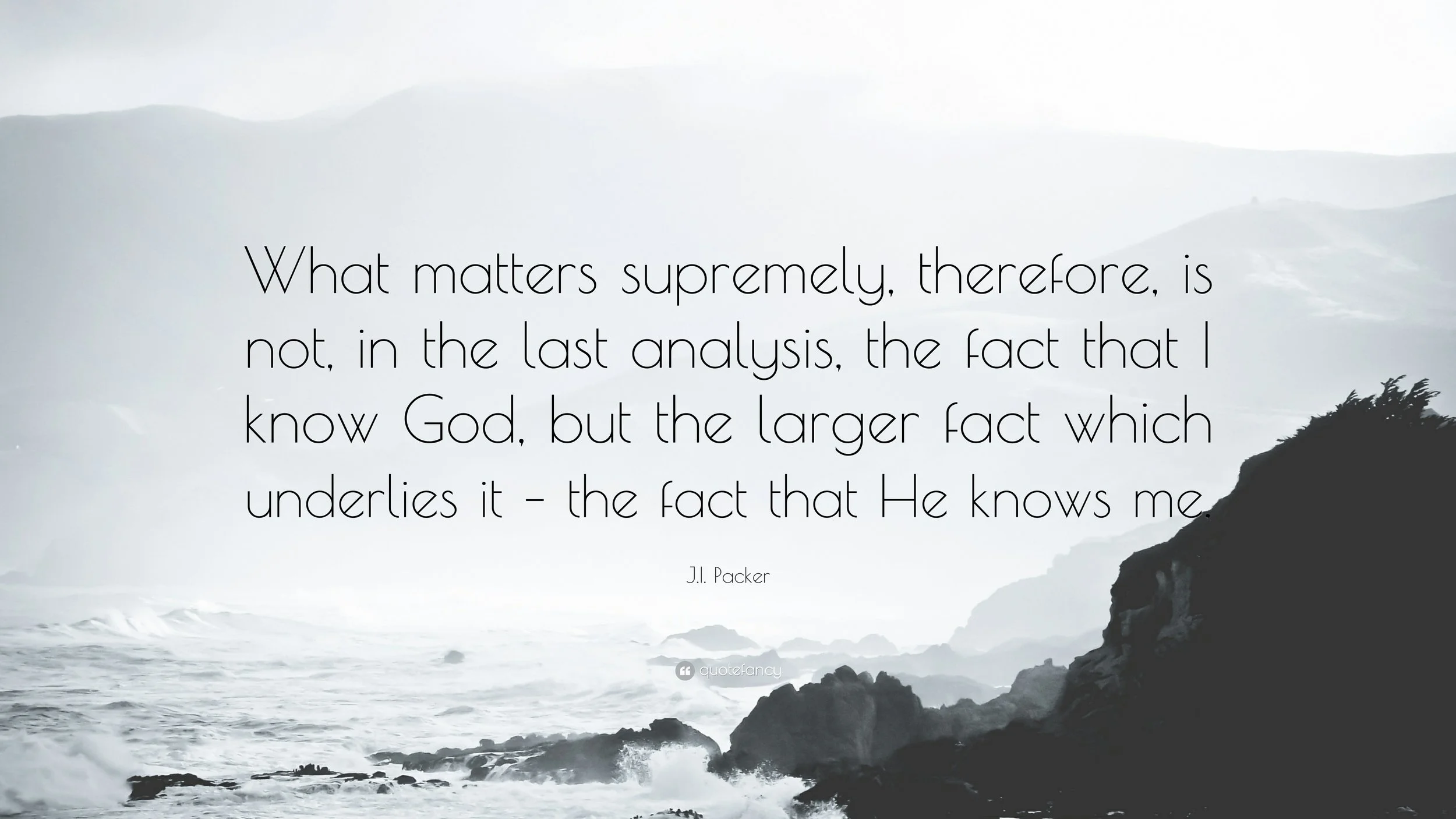
J.I. Packer quote from his book, “Knowing God” (1973)
Seeking God’s Face Devotional
This year, we’ll be using the devotional “Seeking God’s Face” for our personal daily discipleship.
This Week’s Liturgy
Call to worship
Isaiah 62:1-5
Leader: For Zion's sake I will not keep silent, and for Jerusalem's sake I will not be quiet, until her righteousness goes forth as brightness, and her salvation as a burning torch.
All: The nations shall see your righteousness, and all the kings your glory, and you shall be called by a new name that the mouth of the Lord will give.
Confession of FAITH
New City Catechism Q & A #38
Q: What is prayer?
A: Prayer is pouring out our hearts to God in praise, petition, confession of sin, and thanksgiving.
Confession of sin
God of all glory, thank you for creating me to bear your image. You are where all true glory is found. Instead of resting in this truth, I have left it far behind and seek after my own glory. Instead of looking and resting in your Son, Jesus, I am seeking rest elsewhere. Reveal to me the utter foolishness of this, and lead me by your Spirit to receive the joy of intimacy with you through your means of grace.
ASSURANCE OF PARDON
Isaiah 25:9
Behold, this is our God; we have waited for him, that he might save us. This is the Lord; we have waited for him; let us be glad and rejoice in his salvation.
This Week’s Playlist


Looking Ahead
Next week, we continue in the Gospel of John on Sunday at 8, 9:30, & 11:15 a.m.