
Be Thou My Vision
Before We Sing
with Brett Taylor, Worship Director
Before we sing “Be Thou My Vision” together this Sunday, take a few minutes to listen and reflect on the story, truth, beauty, and goodness of what we are about to sing.
The Story
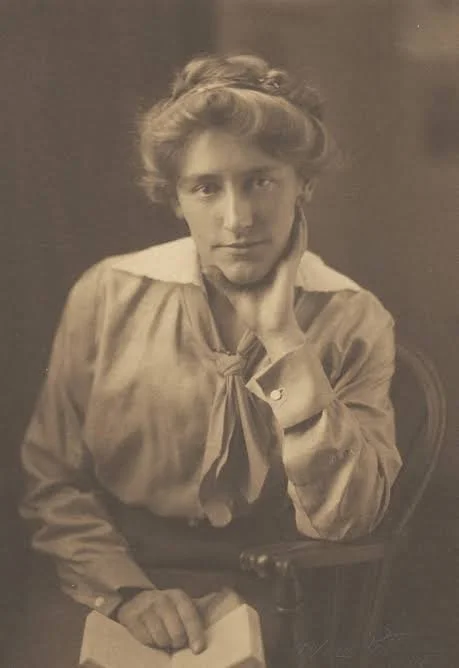
“Be Thou My Vision” began as an anonymous Irish prayer, probably from the 10th or 11th century, in a world of rival kingdoms, swords, shields, and uncertain roads.
Nearly a thousand years later in 1905, Irish scholar Mary Elizabeth Byrne translated the ancient Gaelic into English. In 1912, Eleanor Hull (pictured) shaped it into the poetry we sing.
Its words were eventually joined to the Irish melody SLANE, named for the Hill of Slane. Tradition remembers that hill as the place where St. Patrick lit an Easter fire while a nearby king had forbidden any flame to burn before his own. Across the darkness, another fire appeared: Christ is risen. There is a higher King. It is wonderfully fitting that we now sing to that melody, “High King of Heaven … Thou and Thou only, first in my heart.”
The Truth
Listen to the prayer’s repeated words: “Be Thou.” Not merely give me knowledge, but be thou my true Word. Not merely show me how to live, but be thou my wisdom. Not merely keep me safe, but be thou my shelter. Not merely secure my future, but thou mine inheritance. Scripture gives us the same startling vision when Paul says everything he once counted as gain became loss beside “the surpassing worth of knowing Christ Jesus” (Philippians 3:8). The gospel offers us more than gifts from God. It gives us God himself.
The Beauty
The hymn begins with the eye and ends with the heart, “Be Thou my vision” … “Heart of my own heart.” Between them, everything competing for us passes through the song. The waking and sleeping, wisdom and strength, riches and praise, shelter and victory. One by one, they move out of the center until only one treasure remains, “Thou and Thou only.” What holds our gaze eventually captures our heart. We behold, we desire, we become. In a world with a thousand fires begging us to look their way, this ancient prayer asks for one holy obsession: High King of Heaven, fill my eyes until you fill my heart.
The Goodness
“Riches I heed not, nor man’s empty praise” is much more than old-fashioned piety. There are still two favorite ways of measuring our lives, “What do I have?” and “What do they think of me?” The hymn quietly dethrones both.
God does not become the only thing we love; he becomes the one by whom everything else finds its proper worth. Our work, possessions, relationships, and accomplishments (even other people’s approval) can become gifts again because they no longer have to be gods.
The Invitation
And then comes a tiny phrase easy to sing past: “whatever befall.” Whatever happens next. Whatever you fear. Whatever you cannot control.
So name your whatever this morning: Even if ________. Then finish the prayer. “Heart of my own heart, whatever befall, still be my vision.” The circumstances may change. The prayer does not. Whatever comes over the hill, keep your eyes on the High King.