
O Love That Will Not Let Me Go
Before We Sing
with Brett Taylor, Worship Director
Before we sing “O Love That Will Not Let Me Go” together this Sunday, take a few minutes to listen and reflect on the story, truth, beauty, and goodness of what we are about to sing.
The Story
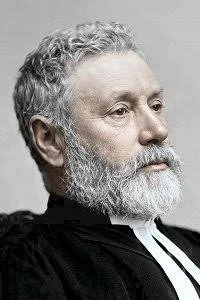
George Matheson was a 19th-century Scottish minister and hymnwriter. He fell in love and became engaged to be married, but soon after learned he was going blind. When he told his fiancée, she said she could not marry a blind man, and the engagement ended. His sister became his companion and helper, even learning Greek and Hebrew to help him through school.
Years later, on the night of his sister’s wedding, Matheson was alone, remembering the love he ached for and the coming loss of his sister's companionship. In what he called a moment of “severe mental suffering,” this hymn poured out in just a few minutes:
“O Love that will not let me go,
I rest my weary soul in Thee.”
He had been let go. And he sang of the Love that never would.
The Truth
When Matheson sings, “I trace the rainbow through the rain,” he is reaching back to Genesis 9. After the flood, God places his bow in the clouds, and the Hebrew used here is the ordinary word for a battle bow. Now picture it: a great weapon stretched across the heavens. But which way is the bow pointed? Not down toward humanity, but upward toward heaven, toward God himself!
And at the Cross, the picture becomes even more astonishing. Isaiah 53:5 says, “He was pierced for our transgressions … with his wounds we are healed.” The God who hangs the bow in the heavens ultimately takes the blow himself. The rain may still come. The storm may still rage. But the bow in the clouds reminds us the arrow is not pointing at us.
The Beauty
Matheson originally wrote, “I climb the rainbow through the rain.” Editors later changed “climb” to the familiar “trace.” But “climb” feels much more visceral. You can almost feel Matheson reaching for the promise in the middle of the storm, grabbing hold of the rainbow and pulling himself upward through the rain.
And notice how much “sight” fills the poetry of a man who could not see. Light follows him. Sunshine lends its blaze. A rainbow appears through rain. Morning waits beyond tears. A red blossom rises from the ground. Physical darkness had closed around Matheson, yet his imagination remained flooded with the light of God.
The Goodness
There is another beautiful pattern hidden in the grammar. Matheson never presents himself as the hero desperately holding onto God. Love will not let him go. Light follows him. Joy seeks him through pain. The Cross lifts his head. God is always moving first.
Suffering can make faith feel like another exhausting thing we must somehow manage to keep alive, but this hymn gives us a different picture. Our hope rests not in the strength of our grip on God, but in the strength of his grip on us. The storm may shake our grip on God, but it cannot shake his grip on us.
The Invitation
Where is it raining in your life right now?
Matheson doesn’t ask us to call the rain sunshine or even to ask that it disappear. “I dare not ask to fly from Thee.” Instead, he teaches us to look through the rain for the promise of God.
As we sing this Sunday, bring the grief, disappointment, fear, or unanswered prayer with you. Trace the rainbow. Climb it if you have to. The storm is real, but so is the bow.
And beneath it all is the love that will not let you go.